
Local News
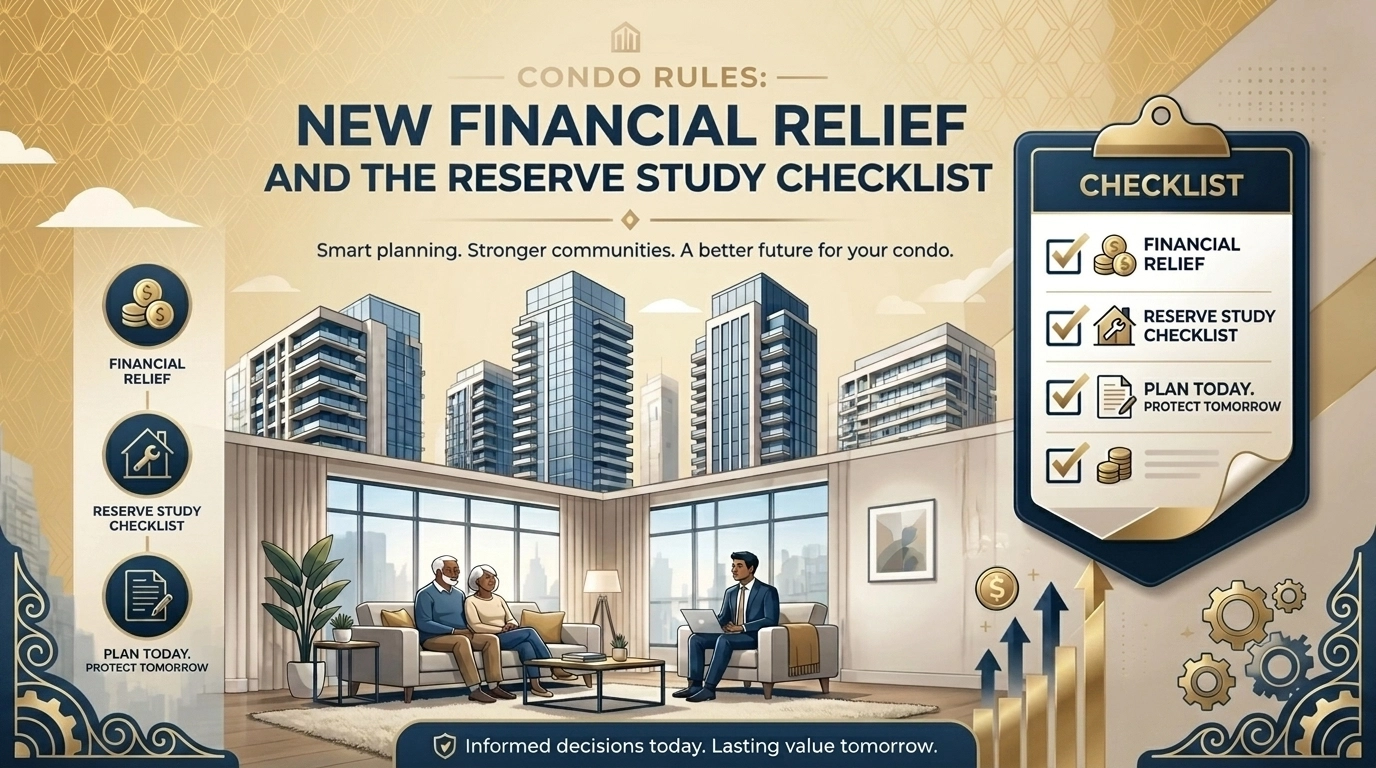
Condo Rules: New Financial Relief and the Reserve Study Checklist
If you’ve been keeping an eye on the Florida real estate market lately, you know that "condo" has become a bit of a buzzword: and not always for the most relaxing reasons. Between the shifting legislative landscape and the looming deadlines for structural integrity reserve studies, both owners and potential buyers are feeling the pressure.
As of May 2026, the landscape is shifting again. We are seeing a unique "perfect storm" in the Pinellas County market, where inventory has climbed to a staggering 8.1 months. For context, a "balanced" market usually sits around six months. This means buyers have more leverage than they’ve had in years, but that leverage comes with a massive side of responsibility: due diligence.
The good news? The Florida Senate has stepped in with some much-needed financial relief, and new flexibility in the rules is making it a bit easier for associations to breathe. Let’s dive into what’s changing, why Pinellas is seeing so much inventory, and the ultimate checklist you need to navigate reserve studies.
The Pinellas Shift: 8.1 Months of Opportunity (and Caution)
In Pinellas County: from the high-rises of St. Pete to the quiet retreats in Tierra Verde: we are seeing a significant uptick in condo listings. An 8.1-month inventory level tells us two things. First, sellers are motivated. Second, buyers are being cautious.
The caution stems from the "Special Assessment" ghost that has been haunting Florida since the 2022 and 2024 legislative sessions. Many buildings are finally getting their reserve studies back, and the numbers aren't always pretty. When an association realizes they haven't saved enough for a new roof or structural repairs, the bill gets passed to the owners. This is why we’re seeing more units hit the market; some owners simply don’t want to (or can’t) foot the bill for these catch-up contributions.
However, for a savvy buyer, this is a "golden era" of due diligence. You have the time to ask the hard questions and the inventory to be picky.

New Financial Relief: Expanding 'My Safe Florida Condo'
One of the biggest wins for condo owners this year is the Florida Senate’s expansion of the 'My Safe Florida Condo' program. Originally focused on single-family homes, this program has been expanded specifically to help lower-income condo owners and associations harden their buildings against storms.
The program provides grants for things like impact-resistant windows, doors, and roof reinforcements. For lower-income owners, this isn't just about safety: it’s about financial survival. By lowering the cost of these upgrades, the program helps reduce the likelihood of massive special assessments and, in many cases, can lead to lower insurance premiums for the entire building.
If you are an owner on a fixed income, this expansion is a lifeline. It acknowledges that while structural integrity is non-negotiable, the state needs to play a role in making those mandates affordable.
HB 913: The Flexibility We’ve Been Waiting For
While the initial post-Surfside laws were strict (and rightfully so), the practical application was a bit of a shock to the system. Enter HB 913. This piece of legislation has introduced some much-needed flexibility into the condo world.
HB 913 offers associations more leeway in how they handle their reserve funding and timelines. It doesn't get rid of the requirement to be safe, but it acknowledges that every building’s financial health is different. It provides alternative pathways for compliance and allows associations to potentially stretch out the "pain" of funding reserves over a slightly more manageable timeline, provided they meet specific safety benchmarks.
This flexibility is a huge part of why the market is starting to stabilize. It gives associations a "plan B" rather than forcing them into immediate, massive assessments that could lead to widespread foreclosures or forced sales.
The Reserve Study Checklist: Your Due Diligence Roadmap
Whether you’re looking to buy or you’re currently sitting on a condo board, the Structural Integrity Reserve Study (SIRS) is your most important document. Think of it as a financial health physical for the building.
If you’re looking at a property on our blog or thinking about making an offer, you need to run through this checklist before signing on the dotted line.
1. The Physical Inspection
2. Document Review
3. The 10% Rule (Lender Standards)
4. Percent Funded Analysis
5. Remaining Useful Life

Why Due Diligence Matters Right Now
With 8.1 months of inventory in Pinellas, you might feel tempted to rush in and snag a "deal." But a deal isn't a deal if it comes with a $50,000 special assessment six months after closing.
At Jonathan Loescher brokered by Realty of America, we specialize in digging into these numbers. We don't just look at the granite countertops; we look at the roof age and the reserve balance. Educational real estate means making sure our clients understand that they aren't just buying a view; they are buying into a corporation (the HOA/COA).
If you’re feeling overwhelmed by the technicalities of HB 913 or the 'My Safe Florida Condo' program, you aren't alone. These are complex legal and financial structures. The key is to work with someone who monitors these legislative updates daily.
Looking Ahead: The Future of the Florida Condo
The next 12 to 24 months will be a period of "right-sizing" for Florida condos. The buildings that have been proactive and transparent about their reserves will hold their value and see their inventory move. The buildings that have ignored the problem will likely see prices drop as buyers demand credits for upcoming repairs.
The expansion of relief programs shows that the state is listening. The goal is to keep Florida condos safe without making them un-affordable. It’s a delicate balance, but with the right information, you can navigate it successfully.
If you want to see how these rules affect a specific building you’re interested in, or if you’re an owner looking to sell and want to know how to position your building’s financial health to buyers, let’s chat. You can contact us here to get a deeper look at the Pinellas market.

Final Thoughts for Buyers
To learn more about who we are and how we help buyers navigate the Pinellas and Tierra Verde markets, visit our about page or check out what our clients have to say on our reviews page.
Have a question about how this applies to your home or loan?
Book a Call