
Local News
What Florida Amendment 3 Would Change for Property Taxes
You open a TRIM notice and try to match the lines to what you actually pay. In November, Florida voters will also see Amendment 3 on the Nov. 3, 2026 ballot. It would raise the homestead exemption for non-school property taxes and lower the cap on how fast non-homestead assessments can rise. School taxes stay on today's homestead rules.
A Tampa Bay Times viewpoints column on Aug. 28, 2026, asked who really pays if Florida's property tax amendment passes in November. Governor DeSantis supported property tax cuts but backed away from Amendment 3 after the Legislature changed his original idea.
What's on the ballot
Amendment 3 is a proposed change to the Florida Constitution. It comes from House Joint Resolution 1F. The official title is Increased Homestead Exemption; Lower Cap on Increases in Non-Homestead Property Assessments. It needs 60% yes to pass. If it passes, it takes effect Jan. 1, 2027. The official ballot summary is from the Florida Department of State.
How homestead works today
If the house is your primary residence and you have a homestead exemption, the first $25,000 of assessed value is exempt from all property taxes, including school taxes. An additional $25,000, on value between $50,000 and $75,000, is exempt from non-school taxes. That is why people say today's non-school homestead exemption is $50,000.
Your bill still depends on assessed value and the millage in your city and county. Millage varies. Check your TRIM notice.
What would change in 2027 and 2028
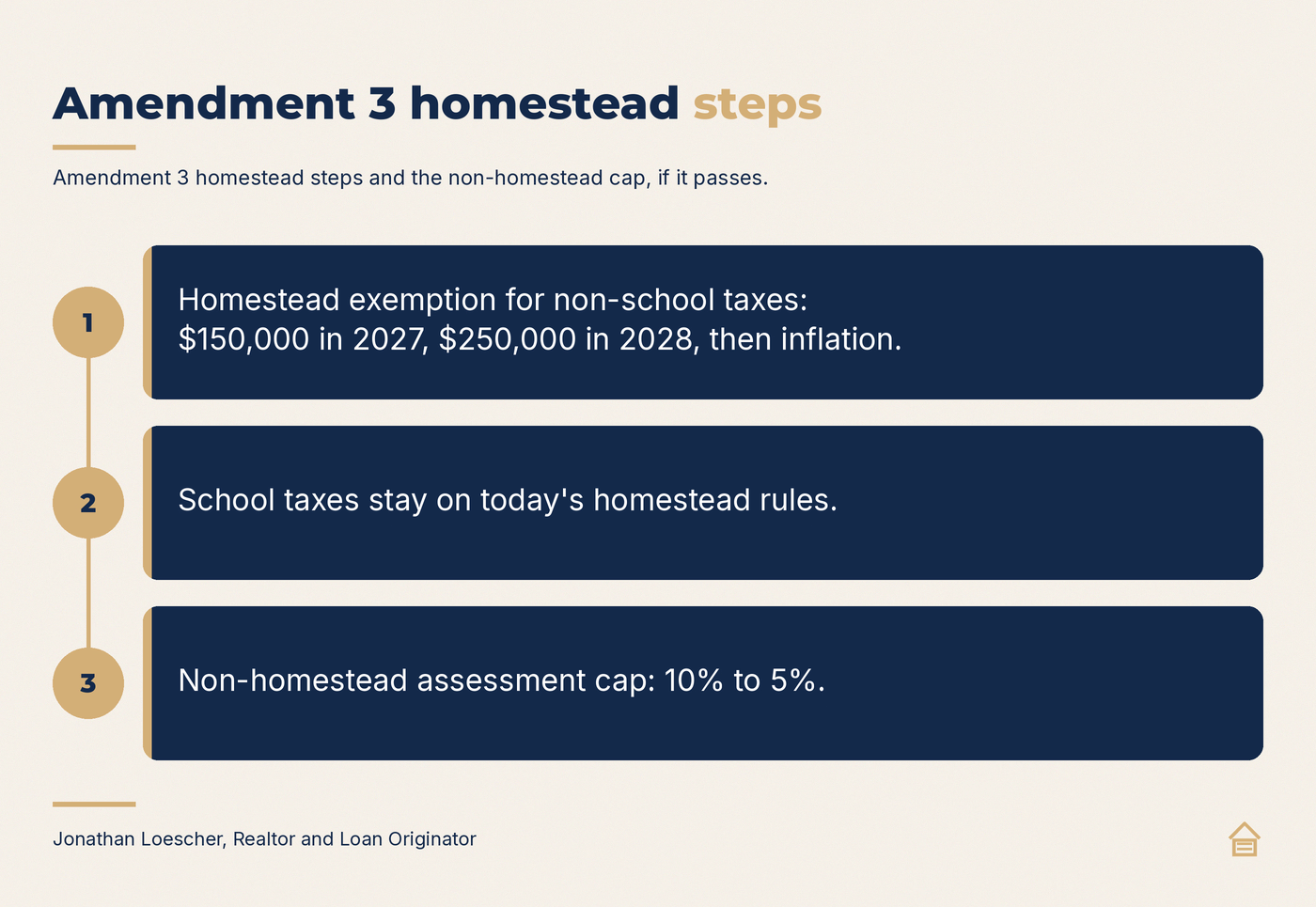
If Amendment 3 passes, the homestead exemption for all non-school taxes would rise to $150,000 in 2027 and $250,000 in 2028, then adjust for inflation.
The Legislature would have to set a uniform procedure so counties and cities can raise that homestead exemption up to the full assessed value. Special districts could do the same if voters in that district approve it.
Amendment 3 homestead steps and the non-homestead cap, if it passes.
School taxes stay
School district taxes are not cut by Amendment 3. The larger exemption is non-school only. You would still see school taxes on the homestead rules that apply today.
If you were not a Florida resident yet
If you are not a Florida resident on Dec. 31, 2026, you would get the existing homestead exemption when you qualify. The increased exemption would begin with the fifth year, to the extent permitted by the U.S. Constitution.
Second homes, rentals, and the 5% cap
Second homes, rentals, and commercial property do not get the larger homestead exemption. Those are non-homestead properties. If Amendment 3 passes, the annual cap on assessment increases for those properties would drop from 10% to 5%.
That cap can slow how fast the assessed value rises. It does not set rent. A landlord's rent is a separate decision from the assessment cap.
The $12 billion projection
Some public analyses, including Florida Phoenix on Aug. 13, 2026, cite a projected local impact that could reach about $12 billion a year by around 2031. A Tampa Bay Times viewpoints column used that same scale. That is a projection. It is not a number on the ballot, and it is not a cut for one house.
A larger exemption can lower the non-school part of a homestead bill. Local governments then have less of that tax to spend, or they may look at other fees or rates. That choice is not on the ballot as a set list of new charges.
What property taxes could be used for
The official summary says counties and municipalities would have to use property taxes solely for public safety, education and schools, infrastructure, natural resources, bond debt service, retirement benefits for employees, and operations and administration. Other spending may be approved by county officers or by county or city governing bodies unless general law says no.
What still costs money
Insurance, HOA dues, and flood coverage are not homestead exemptions. They still sit on the file if they apply to the house. If you are buying, those costs count when you look at a payment.
What you can do next
Read the official ballot summary from the Florida Department of State. Check your homestead filing with your county property appraiser, and keep your TRIM notice. If you want to talk through a specific house or a loan file, book a consultation with Jonathan Loescher, Realtor, Realty of America. If you are buying, apply for a loan. I originate Florida loans through PMF, Inc. You don't have to use both. Approvals stay conditional on lender review.
Common questions
- Where is Bayou Club in Seminole, Florida?
- Bayou Club Estates is a gated golf community on the Seminole and Largo edge of Pinellas County. Most listings use a Seminole city and ZIP 33777. The gate is off Belcher Road. It is not in Seminole County. Open the Bayou Club homes for sale search for live listings.
- Where is Oakhurst Shores in Seminole, Florida?
- Oakhurst Shores is a west Seminole neighborhood in Pinellas County near Oakhurst Drive, Grove Street, and Boca Ciega Bay. Most sale files use ZIP 33772. It is not in Seminole County. Many homes may have water frontage, however being in this community does not guarantee water frontage. Search live files on the Oakhurst Shores homes for sale page.
- Where is Yacht Club Estates in Seminole, Florida?
- Yacht Club Estates is a Seminole neighborhood in Pinellas County. Listings cluster on streets such as Portside Drive and Commodore Drive in ZIP 33776. It is not Seminole County. The yacht-club name does not guarantee a slip or dock. Search live files on the Yacht Club Estates homes for sale page.
- How long does it take to sell a house in Pinellas County?
- Time on market follows how you price against the last 90 days of solds nearby, plus condition, access, and condo docs. After a contract, closing still needs title, the buyer's loan, and your move-out. I list through Realty of America. When I quote Stellar MLS solds, they will carry a date range so you see that neighborhood, not a county-wide average.
- How much down payment do I need in Florida?
- Florida does not set one down payment for every buyer. VA may allow zero down if you are eligible. FHA, conventional, and other programs each have their own floors. Assistance may layer on after eligibility is confirmed. I originate through PMF, Inc. Your down payment comes from the program that fits your file.
More Tampa Bay home and loan answers on Ask Jonathan.
Enjoying this? Make us a preferred source on Google.
Have a question about how this applies to your home or loan?
Book a Call