
Local News
My Safe Florida Home Program Reopens: How Tampa Bay Homeowners Can Protect Their Property and Save
Big News for Tampa Bay Homeowners
If you've been putting off those hurricane protection upgrades because of the cost, I've got some great news. The My Safe Florida Home Program is reopening on Monday, August 4th with $280 million in new funding. That could mean up to $10,000 in matching grants to help storm-proof your home.
As a Tampa Bay homeowner myself, I know firsthand how critical storm protection is. We've dodged some bullets in recent years, but living in Hurricane Alley means it's not a matter of if, but when the next big one hits. This program is a golden opportunity to protect your most valuable asset while potentially lowering your insurance premiums at the same time.
What Is the My Safe Florida Home Program?
The My Safe Florida Home Program was designed to help Floridians make their homes more resistant to hurricane damage. Since 2022, it's reimbursed an impressive $369 million to 39,271 homeowners across the state.
Here's what makes this program special: it offers matching grants up to $10,000 for specific home-hardening improvements. For most qualifying homeowners, the state puts in $2 for every $1 you spend. That triples what you put in.
This year's $280 million allocation is significant, though less than the $590 million originally requested by Governor DeSantis. That means funds will likely get claimed quickly, making it crucial to understand the process and act fast.
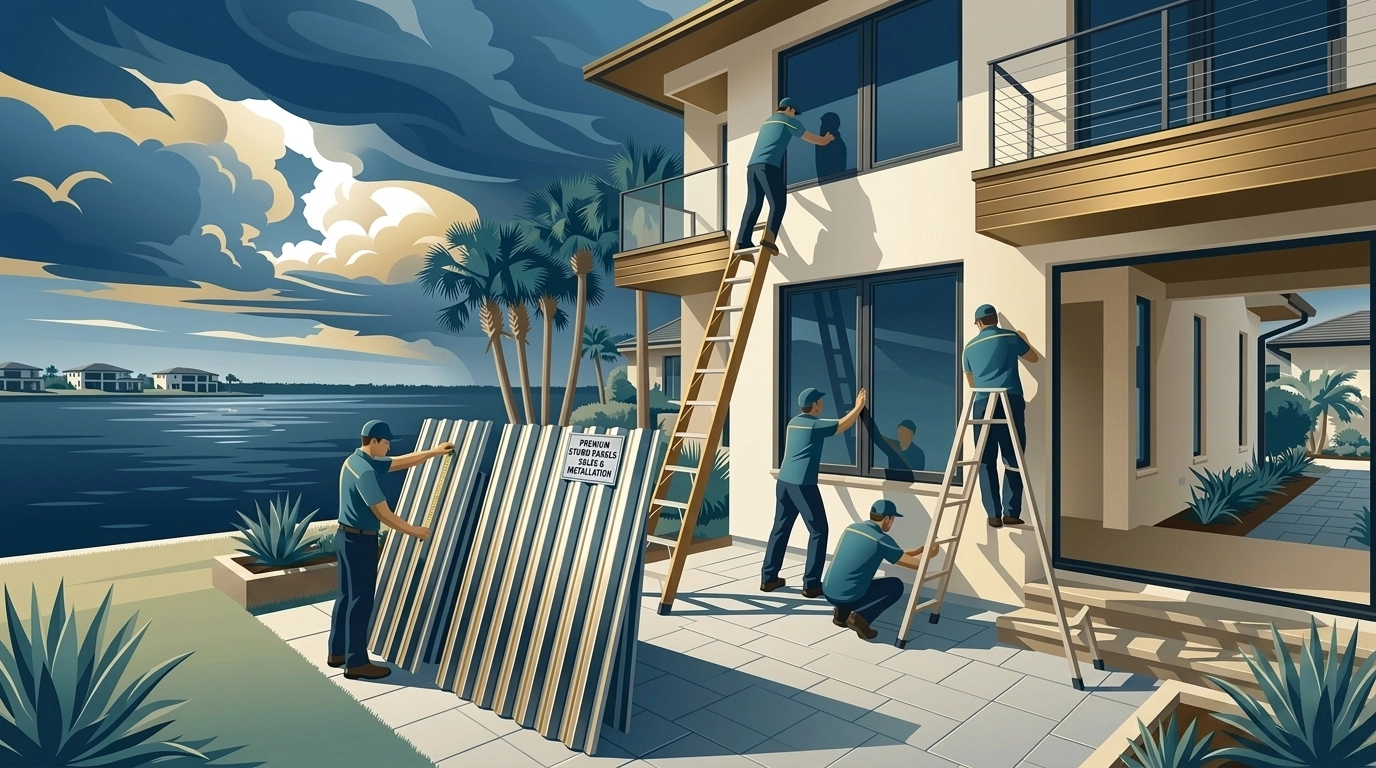
Are You Eligible?
Before you get too excited, let's make sure you qualify. To be eligible for the My Safe Florida Home Program, your property must meet these requirements:
- Single-family, detached residential property or townhouse
- Site-built (not manufactured or mobile homes)
- Owner-occupied (this must be your primary residence)
- Has a homestead exemption under Florida law
- Insured value of $700,000 or less (low-income homeowners are exempt from this cap)
This program is particularly focused on older homes that were built before modern hurricane building codes went into effect. These properties typically have the most to gain from hardening improvements.
Understanding the New Priority System
Here's where things get a bit complicated for 2025. Unlike previous years where it was simply first-come, first-served for all homeowners, this year's program has implemented a priority system based on income levels.
Initially, only low and moderate-income households will be eligible to apply. The definitions for these income categories are set by HUD and vary by county and household size, but generally:
- Low-income: Households earning 80% or less of the county's median income
- Moderate-income: Households earning between 80% and 120% of the county's median income
Higher-income homeowners might get to apply after September 29th, but only if funds remain. Based on past demand, I doubt they will.
There's a significant advantage for low-income homeowners: they won't need to contribute any matching funds. Everyone else in the moderate-income category will still need to put up $1 for every $2 from the state.
What Improvements Qualify for Funding?
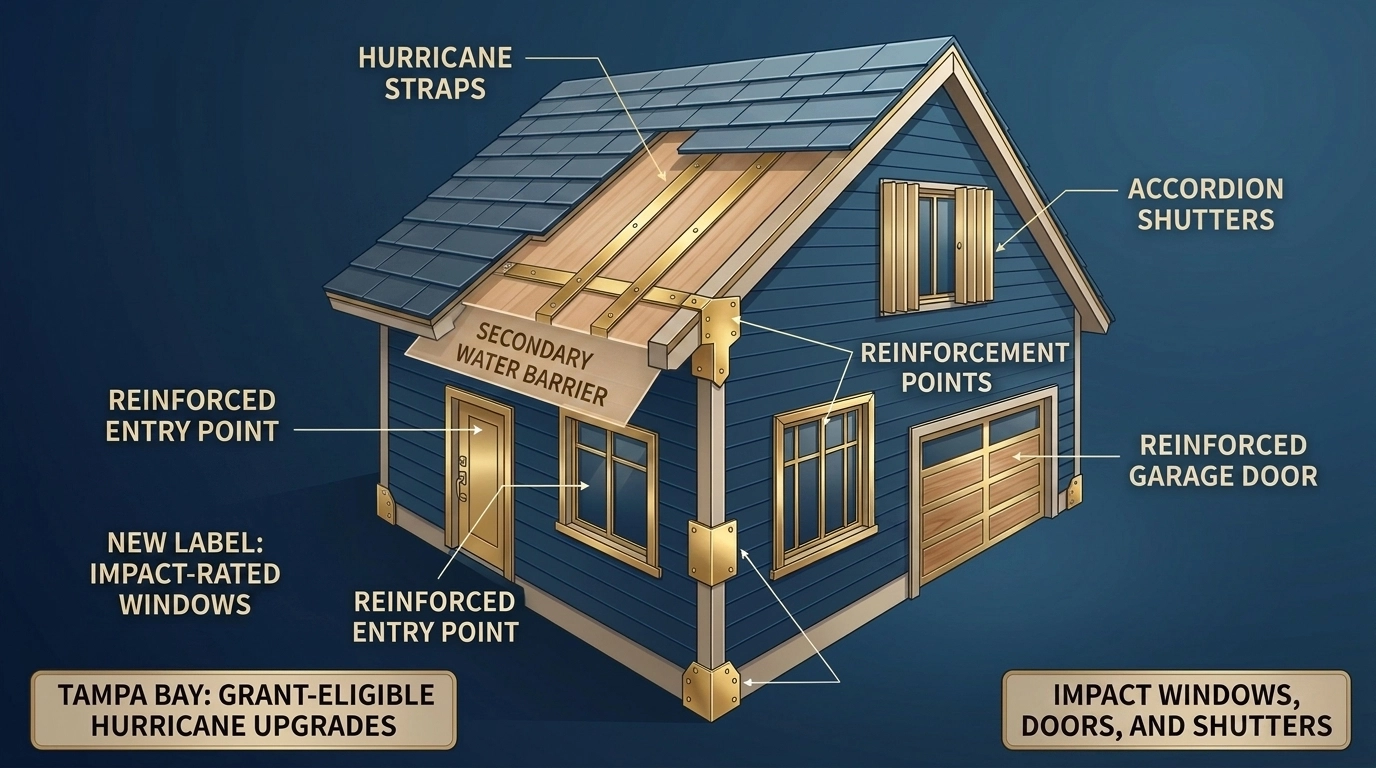
The program focuses on specific hurricane-resistance improvements that have been proven to reduce damage:
1. Secondary Water Resistance Barriers for Roofs
2. Structural Reinforcement
3. Opening Protections
The Application Process: Step by Step
Successfully navigating this program requires following the correct sequence. Here's how to do it:
Step 1: Request a Free Inspection
Pro tip: Do this ASAP, even if you're not sure about your income qualification. The inspection is the first required step, and it's completely free.
Step 2: Review Your Inspection Report
Step 3: Apply for Grant Funding
Step 4: Get Approved Improvements Done
Step 5: Submit for Reimbursement
The Double Benefit: Protection and Savings
What makes this program particularly valuable is the dual benefit it offers Tampa Bay homeowners:
1. Immediate Financial Assistance
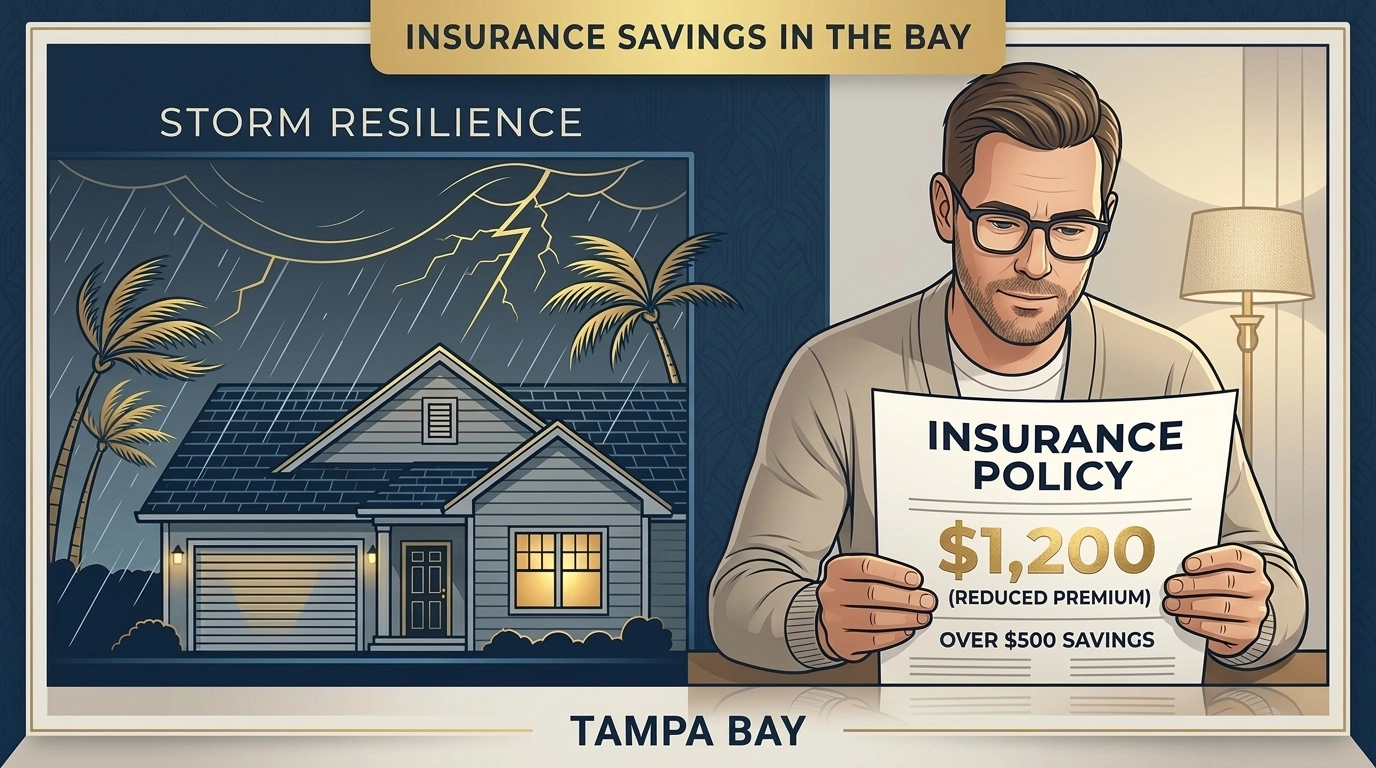
2. Long-Term Insurance Savings
One client I worked with recently saw their annual insurance premium drop by over $1,200 after implementing the recommendations from their inspection. Within just a few years, these savings completely offset their out-of-pocket costs for the improvements.
Tampa Bay Specific Considerations
For our Tampa Bay community, there are some specific considerations to keep in mind:
Regional Price Differences
Local Weather Patterns
Insurance Market Impact
Tips for Success
Based on previous rounds of funding, here are my top tips for Tampa Bay homeowners:
1. Act immediately when the portal opens on August 4th. Previous funding rounds were exhausted in as little as 17 days.
2. Have your documentation ready before applying, including proof of income, homeownership, and homestead exemption status.
3. Get your free inspection scheduled ASAP, even if you're not sure about your qualification status. The inspection is valid for a year and is required before you can apply for grants.
4. Work with reputable, licensed contractors who understand the program requirements and documentation needed.
5. Consider combining improvements to maximize both your grant funding and insurance savings.
What If You Miss Out?
With limited funding and high demand, not everyone will receive grants this round. If you miss out, consider:
- Pursuing the inspection anyway for insurance discount purposes
- Implementing the most cost-effective improvements on your own
- Looking into other assistance programs that may be available
- Preparing for the next funding round (the program has received new funding each year since 2022)
Bottom Line
The reopening of the My Safe Florida Home Program represents a significant opportunity for Tampa Bay homeowners to strengthen their properties against hurricanes while potentially saving thousands on insurance.
With $280 million in funding, up to $10,000 in matching grants, and prioritization for lower-income households, this program can make critical home improvements accessible to many who couldn't otherwise afford them.
Given the limited funding and first-come, first-served basis, I strongly recommend creating your account now and requesting your free inspection as soon as the portal opens on August 4th.
As always, if you have questions about this program or how hurricane mitigation might affect your home's value or insurability, don't hesitate to reach out. I'm here to help Tampa Bay homeowners with all of it. That means buying, selling, and protecting your home for years to come.
Stay safe, Tampa Bay!
Common questions
- When should I shop for home insurance in Florida?
- Shop 45 to 60 days before your renewal. If you're buying, get quotes during your inspection period so you can still walk away if insurance doesn't work. Shop again after a new roof, after wind upgrades, or when you get a nonrenewal notice. Don't wait for a storm. Insurers often pause new policies when a named storm is near Florida.
- What is Zone X vs AE in Tampa Bay flood zones?
- AE is FEMA's high risk zone, with a set base flood elevation. If you finance with a federally backed or regulated lender, flood insurance is required there. X is moderate (shaded) or minimal (unshaded) risk, and flood coverage isn't federally required, though a lender can still ask for it. Both zones flood. Check the lot on the current map and get a quote before you write.
- Do I need a wind mitigation inspection to buy a home in Florida?
- Florida law doesn't require it to buy. It's for insurance. Insurers must offer discounts for wind features, like roof-to-wall straps and protected openings, and the state's uniform form documents them. A completed form is valid for up to five years if the house hasn't changed. Ask the seller for theirs, or order one during your inspection period so the quote reflects the credits.
- What is a 4-point inspection in Florida?
- A 4-point inspection looks at the roof, electrical, plumbing, and HVAC. Insurers use it to decide whether to write a policy on an older home. Each insurer sets its own age cutoff. It isn't a full home inspection or a wind mitigation report. On older Pinellas homes, plan for it during your inspection period so issues show up while you can still negotiate.
- Is flood insurance required in Pinellas County?
- Pinellas County has no blanket rule. Flood insurance is required when the home is in a high risk FEMA zone, like AE or VE, and the mortgage is from a federally regulated or backed lender. A lender can ask for it in other zones too. Cash buyers decide for themselves. Standard homeowners policies don't cover flood, so I get a flood quote on every house.
More Tampa Bay home and loan answers on Ask Jonathan.
Enjoying this? Make us a preferred source on Google.