
Smart Equity
Smart Equity: Strategic Equity Preservation in the 2026 Reset
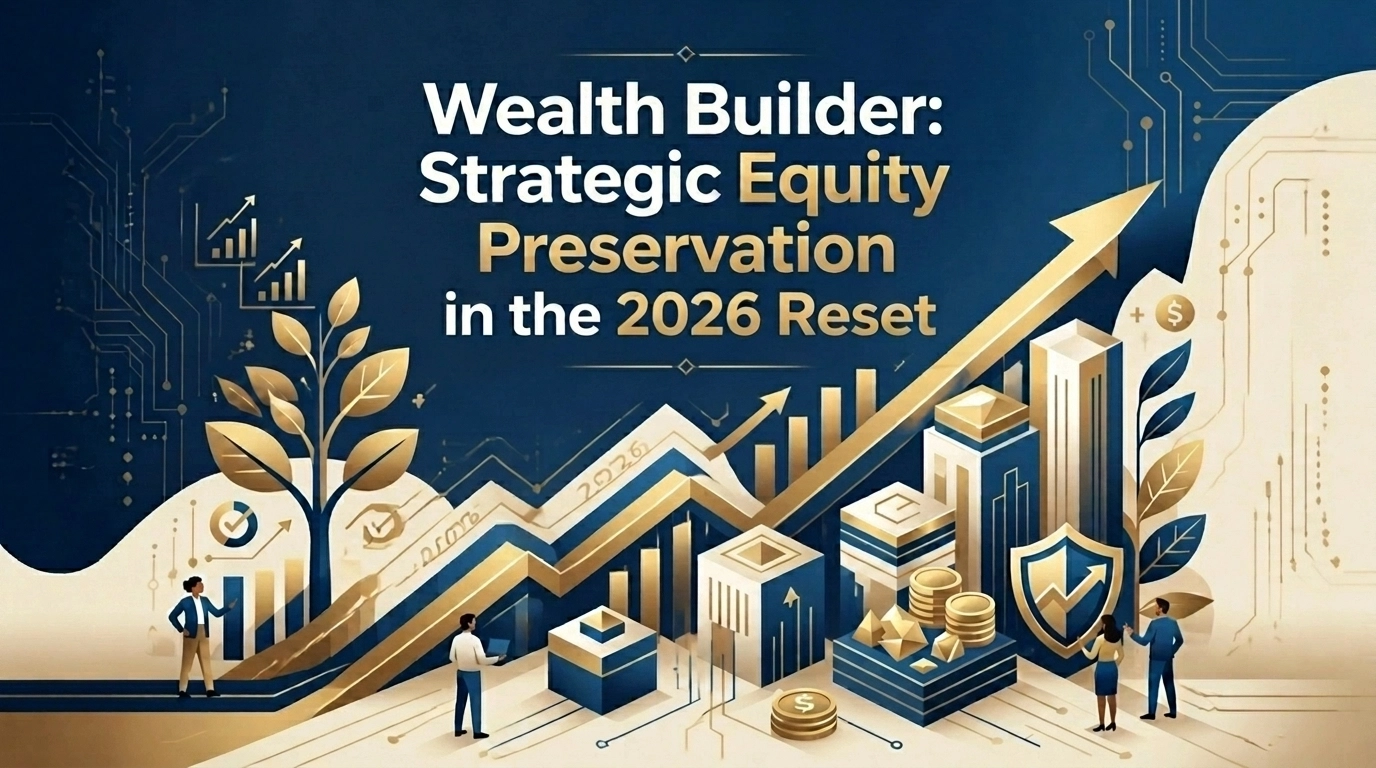
Hey there. If you’re reading this in May of 2026, you’ve likely noticed that the real estate landscape looks a little different than it did a couple of years ago. We’ve officially moved past the "easy money" era and settled into what I like to call the 2026 Reset.
This isn't a reason to panic. In fact, for the savvy investor or homeowner, it’s a massive opportunity. The market isn't just changing; it’s recalibrating. And in a recalibrating market, the name of the game is no longer "quick flips": it’s Strategic Equity Preservation.
At Realty of America, we believe that wealth isn't just about what you make; it’s about what you keep and how you grow it over time. Let’s dive into how you can use this "reset" to build something that lasts for generations.
Understanding the 2026 Reset
What exactly do we mean by the 2026 Reset? For the last few years, we saw interest rates stabilize at a "new normal," and the frenzied over-bidding of the early 2020s has been replaced by a more calculated, data-driven market.
We are seeing a shift where property values are no longer skyrocketing 20% year-over-year, but they aren't cratering either. Instead, they are finding their true floor. This is a "reset" because it forces us to look at real estate as a long-term asset rather than a speculative ticket to a quick buck.
To win in this environment, you need to shift your mindset from "transactional" to "foundational."
The Power of the Long-Term Hold
In 2026, the most successful "Wealth Builders" are those who understand the power of the long-term hold. When the market recalibrates, selling might not always be your best move: especially if you’ve locked in a decent rate or have significant equity sitting in your property.
Equity preservation is about protecting the value you’ve already built while allowing time to do the heavy lifting. By holding onto assets through market cycles, you benefit from:
- Amortization: Your tenants are paying down your debt.
- Tax Advantages: Depreciation and 1031 exchanges remain the most powerful tools in the investor’s belt.
- Appreciation: Even at a modest 3-4% annual growth, the compounding effect over a decade is staggering.

Leveraging Development Milestones: Gasworx and Beyond
One of the smartest ways to preserve and grow equity is to position your assets near major infrastructure and development milestones. Here in our neck of the woods, projects like Gasworx and Olivette are changing the game.
When you invest near a massive mixed-use development like Gasworx, you aren't just buying a house or a condo; you’re buying a seat at the table of a city’s evolution. These developments bring:
- Increased Demand: More jobs and amenities mean more people want to live nearby.
- Forced Appreciation: As the "new" area becomes the "it" area, surrounding property values get a natural lift that outpaces the general market.
- Stability: Large-scale developments represent billions in committed capital. That capital acts as a safety net for your equity.
If you’re curious about how your current portfolio stacks up against these local growth corridors, feel free to check out our blog for deeper dives into local area trends.
The Rental Pivot: From Seller to Landlord
A key strategy in the 2026 Reset is the Rental Pivot. Perhaps you were planning to sell your home to upgrade, but you’ve realized that your current equity is a goldmine. Instead of selling and paying capital gains or moving into a higher-priced environment, many homeowners are choosing to turn their previous primary residence into a high-performing rental.
The rental market in 2026 remains incredibly resilient. As the "cost of entry" for new buyers stays high, the demand for quality rentals continues to grow.
By pivoting to a rental strategy, you:
- Maintain your equity position.
- Generate monthly cash flow.
- Wait for the next peak in the market cycle to sell (if you even want to by then).

Building Generational Wealth
Wealth building isn't just for you; it’s for the people who come after you. One of the most educational aspects of the 2026 market is the focus on estate planning and tax efficiency.
As we mentioned in our research, federal estate and gift tax exemptions are currently at a unique crossroads in 2026. This is the perfect time to look at structured gifting or moving assets into trusts. Real estate is the perfect vehicle for this because it’s a tangible asset that provides both income and legacy value.
At Realty of America, we don’t just help you buy a house; we help you build a legacy. Whether it’s exploring properties in Tierra Verde or looking for the next urban gem, we focus on the long-term trajectory.
Risk Management in a Recalibrating Market
Strategic equity preservation also requires a defensive play. You can't just buy and hope. You need to manage risk actively. In 2026, this means:
- Diversification: Don't put all your eggs in one neighborhood.
- Liquidity: Ensure you have enough cash reserves to weather a vacancy or a maintenance emergency.
- Regular Portfolio Reviews: Just like you check your 401(k), you should be checking the "health" of your real estate equity. Is your property still meeting its ROI goals? Is there a better use for that equity through a cash-out refi into a new asset?
How We Can Help
Navigating a "reset" can feel overwhelming, but you don't have to do it alone. The casual "handshake" deals of the past have been replaced by a need for sophisticated, educational guidance.
As the Founder of this practice, I make it my mission to ensure our clients aren't just making moves, but making the right moves. We look at the data, we look at the development milestones, and we look at your personal "why."
If you’re ready to stop looking at real estate as a series of transactions and start looking at it as a wealth-building engine, let’s talk.

Final Thoughts
The 2026 Reset is a gift to those who are patient and prepared. By focusing on strategic equity preservation, leveraging milestones like Gasworx, and mastering the rental pivot, you aren't just surviving the market change: you’re thriving in it.
Ready to see what your equity can really do? Contact us today and let’s build a strategy that stands the test of time. You can also read what our clients have to say about our approach over on our reviews page.
Here’s to building wealth that lasts.
- Jonathan Loescher Realtor with Realty of America
Common questions
- How does a DSCR loan help investors buy rentals in Tampa Bay?
- It qualifies a rental on its rent compared to the full payment, not your personal income. It's for business-purpose rentals only. Expect larger down payments and reserves. Check local rental rules first. Any loan approval is conditional until all underwriting conditions are met.
- What's the difference between a second home loan and an investment property loan?
- It depends on how you'll use the home. A second home is for your own use part of the year, and programs limit renting it. An investment property is bought to rent. Investment loans usually need a larger down payment and reserves and price higher. You certify occupancy at closing. Any loan approval is conditional until all underwriting conditions are met.
- How does a bank statement loan work for self-employed buyers in Tampa Bay?
- It uses deposits on your bank statements over many months, not tax returns, to figure income. It's a non-QM option for self-employed buyers whose returns understate cash flow. Expect larger down payments, reserves, and pricing that differs from conventional. Any loan approval is conditional until all underwriting conditions are met.
- Do I need a state license for a short-term rental in Florida?
- Yes, if you rent more than three times a year for stays under 30 days, or advertise it that way. You need a DBPR vacation rental license, either Condo or Dwelling, before you operate. Running without one is a second-degree misdemeanor. You'll also need tax registrations and any local permit your city or county requires.
- Can I do short-term rentals in Tampa?
- It depends on the zoning. A 2022 Tampa court decision upheld a violation for a two-night rental in a South Tampa RS-60 zone, reading the code to require weekly or longer stays there. Other zones may differ, and the code can change. Before you buy, check the parcel's zoning with the city, read any HOA or condo rules, and plan for the state license and taxes.
More Tampa Bay home and loan answers on Ask Jonathan.
Enjoying this? Make us a preferred source on Google.