
Selling
How to Sell a House Fast in Tampa Bay
Selling a house fast in Tampa Bay is a pricing, insurance, title, and contract problem. Staging and photos help, but they do not bind a policy, clear an HOA estoppel, or get a financed buyer to a clear-to-close. If you overprice in the first two weeks, the rest of the work starts late.
I am Jonathan Loescher, a Tampa Bay Realtor and Loan Originator. Florida real estate license SL3546365. NMLS 2621894. Real estate is through Realty of America. Lending is through PMF, Inc. The two stay separate. I work from 29399 US Highway 19, Suite 150, Clearwater, FL 33761. I list the home you are leaving, and I can originate the next loan if you are buying after you sell.
Selling fast in Tampa Bay at a glance
- Price into the band where buyers actually search. A number just over a round cap can hide the listing.
- The first two weeks set the file. After that, a stall is usually price, not photos.
- Florida still requires disclosure of known material defects. As-is does not cancel that duty.
- As-is also does not stop a buyer inspection or a walkaway during the FAR/BAR inspection period.
- The usual stalls here are insurance bind, flood questions, HOA or condo estoppel, appraisal, and title payoff.
- Cash can skip appraisal and underwriting. It still needs title, and the buyer still needs insurance to occupy.
- A financed buyer I originate can be a stronger file than a thin cash offer with messy title or no binder.
- If you are buying next, the sale and the purchase share one calendar. Start on the sell page or pull a comparable-sales range on home value.
What actually speeds or kills a Tampa Bay sale
Insurance bind
A financed buyer cannot close without a homeowners policy the lender will accept. A cash buyer who plans to live in the house still needs a policy. In Tampa Bay that bind is often the slow piece. Coastal waterfront, older bungalows, and condos do not shop the same way. We get a quote on the address from a real insurance agent.
Flood
Zone X is generally lower flood risk. AE is a special flood hazard area that often needs flood insurance. Buyers and underwriters ask this early. Confirm the current FEMA map and a quote before you treat the list price as the whole payment. I wrote the short version at Zone X vs AE.
HOA and condo estoppel
If the property has an association, title needs an estoppel that states what is owed, what transfers, and whether the seller is current. Condos add association insurance, questionnaires, and reserve questions. The association issues the packet on its clock. More on Florida HOA fees in Tampa Bay.
Appraisal, title, and the first two weeks
Financed offers usually need an appraisal. If the list price sits above what recent solds support, the file can fail after you accept the offer. That is a day-one pricing problem.
Old mortgages, unreleased liens, probate, and a late payoff all sit on the seller side. Cash does not erase them. I order title early and I request the payoff when the contract is real.
The first two weeks are when the listing is new in every search. A reduction later does not reset the file to day one. If you need speed, we price from solds, not from the number a portal printed.
How should I price if I need to sell fast?
Price from nearby solds that a buyer and an appraiser will both accept. I pull that range from local comps, not from a national estimate. You can start with the comparable-sales range on home value. That is an educational range, not an appraisal. Then we sit with the solds that match your house, your condition, and your street.
MLS search is a filter. Buyers cap price. They set a max of $400,000, or $500,000, or $600,000, and they do not see the house listed at $405,000, $510,000, or $615,000. Pricing just over a round number can hide you from the people who would have booked the showing. If you need a fast sale, I would rather sit you inside the band they already use than hope they widen the search.
I will not claim a slightly lower number creates a bidding war. The honest move is a number the solds support, in a band buyers can find, with room for a financed appraisal.
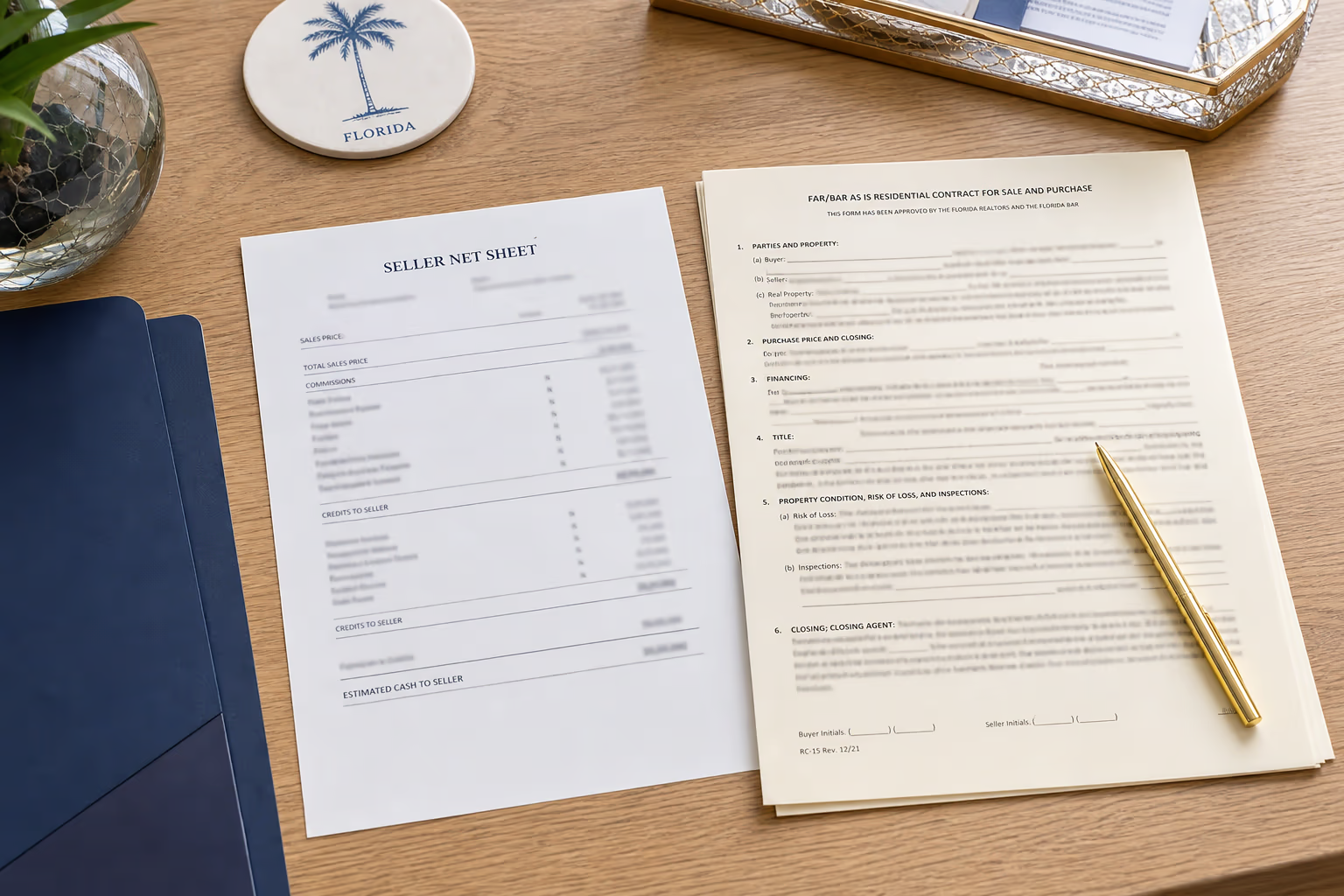
Net proceeds are a separate sheet. Deed stamps, title, prorations, HOA or CDD items, and the brokerage compensation you actually signed all come out before you see a wire. The commission is negotiated with your Realtor®. Ask for a net sheet on your address. The line items are on what it costs to sell and Florida closing costs.
Should I repair, stage, or sell as-is in Florida?
Florida still requires you to disclose known material defects. Selling as-is does not hide a roof you know is failing, a flood claim you already filed, or a permit you never closed. As-is is a contract form about repair credits. It is not a silence clause.
The FAR/BAR as-is contract still gives the buyer an inspection period. They can hire an inspector. They can walk during that period. They can ask for a credit or a repair anyway. If you need speed, as-is can cut the repair argument. It does not cut the inspection clock, and it does not force them to close.
A pre-listing inspection is a timeline tool. You see the items before the first showing. You decide what to fix, what to credit, and what to disclose. It is not a magic net. A buyer can still inspect. An appraiser can still flag condition. A carrier can still decline the bind. I use the report so we are not discovering a water heater late in the inspection window.
Repairs that usually earn their keep stop a walkaway or a failed bind: active leaks, open electrical, a roof a carrier will not write, and safety items. Staging is access and clarity. Clean and light beat a furniture package I cannot defend as a speed tool. If the house is an older bungalow with original baths, we price that house. If condition is rough and you want out, we list as-is and we price the work into the number.
Florida-only rules that change the timeline
These are the Florida pieces on a Tampa Bay closing calendar. They are Florida rules, not a national staging list.
- Disclosure. You disclose known material defects that are not obvious to a buyer walking through. I put that on paper before we go live. A later surprise is how a fast file becomes a cancelled file.
- Deed documentary stamp tax. Florida charges $0.70 per $100 of the sale price in Pinellas, Hillsborough, and Pasco. Miami-Dade uses a different deed rate. Custom in Tampa Bay puts this on the seller. On a $400,000 sale that line is $2,800. It is due whether the buyer pays cash or finances. Buyer and seller stacks: Florida closing costs.
- HOA, condo, and CDD estoppels. Associations and districts issue payoff and transfer letters. New Pasco and Hillsborough product often has a CDD on the tax bill. That assessment prorates at closing. See what a CDD is in Florida if the tax bill has a district line.
- Insurance the buyer must bind. The contract can be signed and the appraisal can be done. If no carrier will write the house, the financed file stops. Cash can close without a lender binder. The occupant still needs coverage, and a buyer who cannot insure the house often will not close.
- Flood zone questions. Waterfront and low lots get this first. Inland Tampa and newer Pasco streets still get asked. I do not guess the zone from a listing photo. We check the map and we get a quote.
- Homestead and Save Our Homes portability. This only matters if you are buying the next Florida home as your permanent residence. You file the new homestead after you move. The usual deadline is March 1. Portability is a separate form. It does not change this seller closing statement. The filing steps are in the Florida homestead exemption article.
Is a cash offer faster than a financed offer?
Cash can be faster when title is clean. A cash buyer can skip appraisal and underwriting. They still need a title search, a payoff, a deed, and any HOA or condo estoppel. They still need insurance if they are going to live there. Cash is not a synonym for no due diligence.
Financed files usually need an appraisal, underwriting, and an insurance binder. That is more steps. It is not automatically a weaker file. A financed buyer I originate is a person I have already looked at. I know the loan program, the flood question, and the cash to close. I would rather take that offer than a cash letter with no proof of funds, a title problem, or a buyer who cannot bind a policy.
Some cash files move quickly. Some sit on estoppel or a lien. Speed is the whole file, not the word cash in the offer.
| What still has to happen | Cash offer | Financed offer |
|---|---|---|
| Title search, payoff, and deed | Yes | Yes |
| Florida disclosure of known defects | Yes | Yes |
| HOA or condo estoppel, if there is an association | Yes | Yes |
| Buyer homeowners insurance | Needed to occupy | Lender requires a binder |
| Flood coverage, if the zone or lender requires it | Often still needed | Usually required in AE and similar zones |
| Appraisal | Usually skipped | Usually required |
| Underwriting and clear to close | No | Yes |
If your buyer needs financing and does not already have a full approval, they can apply for a loan with me. Approvals stay conditional on lender review. PMF, Inc. and Realty of America stay separate companies.
If you also need to buy the next home
A listing-only sale is one calendar. A sale plus a purchase is two closings that have to line up. I wrote the short fork at buy first or sell first. The answer depends on equity, the next loan, and whether you can carry two houses for a stretch.
Sell first. You know your proceeds. You make a cleaner offer on the next house. You may need a short-term place to live, or a rent-back, if the next house is not ready.
Buy first. You lock the next house before you are out of this one. You need a way to qualify and a way to close without the sale proceeds sitting in your account yet. That is a loan conversation and a listing conversation at the same time.
List + Buy is the path where I list this house and represent you on the next one. Buy-before-you-sell is a lender program that can let you purchase first. The 2.4% is a lender program fee on the sale of the current home. It is not a brokerage commission. I model it on a worksheet. I do not treat it as a listing discount.
If you are also the buyer on the next house, Buyer Credit may show up on that purchase worksheet. Buyer Credit is 20% of the buyer-side commission that is actually available. It is educational, not a promise. Homes for Heroes is only in play if you also buy and your occupation may qualify. Eligibility is confirmed at consult. It does not stack with other credits I may discuss.
Side-by-side paths are on services, as educational estimates, not a loan quote. For the next purchase on paper, apply for a loan. For the listing conversation first, book a consultation.
Tampa Bay proof
I work the metro. The office is in Clearwater. The files are in Clearwater, St. Petersburg, Tampa, and newer Pasco and Hillsborough streets. A gulf-front condo, a St. Petersburg bungalow, a South Tampa bungalow with a 1950s roof, and a new two-story in Wesley Chapel or SouthShore are not the same sale.
Waterfront asks flood and wind first. Older bungalows ask roof age, plumbing, and whether a carrier will bind. Condos ask estoppel, association insurance, and whether the buyer's loan program will accept the building. New Pasco and Hillsborough product often adds a CDD and a builder-era HOA. The list price is not the whole cost, and the closing date is not the date on the first offer sheet.
Counts and medians move. If you want to see what buyers are looking at right now, browse live Tampa Bay listings or read the community guides. Tours come from the listing, not from a generic booking link.
Houses that stay under contract are priced in the right band, disclosed cleanly, and paired with a buyer who can insure and fund. Houses that sit are usually overpriced, uninsurable, or waiting on an association letter nobody ordered.
The process I run on a fast sale
- Net sheet and comps. Payoff, stamps, title, prorations, association items, and the compensation you actually signed. Start at home value if you want the range before we talk.
- Disclosure and file setup. Known defects on paper. HOA, condo, or CDD documents requested. Flood and insurance asked on the address.
- Price into the MLS band buyers already use. I show you the solds and the filter caps. You pick the number with that in front of you.
- Repair, as-is, or pre-listing inspection. We choose that on purpose.
- Listing prep. Photos, access, and a showing plan people can actually use.
- Go live and watch the first two weeks. If the activity is not there, we talk about price.
- Offer screen. Proof of funds on cash. Full approval, or an application I can originate, on financed. Insurance path named before we celebrate.
- Contract clock. Inspection period, appraisal if it is financed, binder, title, payoff, estoppel.
- Close, then the next house if you have one. Homestead and portability wait until you occupy the new place.
Get the listing conversation on a real address
A fast Tampa Bay sale is a price buyers can find, a disclosure that holds, a title that can transfer, and a buyer who can bind insurance and fund. I will run that file with you.
Book a consultation if you want a listing conversation on your house. Apply for a loan if you are buying the next home, or if your buyer needs financing I can originate. Supporting pages: sell and home value.
Equal Housing Opportunity. Florida real estate license SL3546365. NMLS 2621894. Real estate through Realty of America. Lending through PMF, Inc. The companies stay separate. Office at 29399 US Highway 19, Suite 150, Clearwater, FL 33761.
Common questions
- Where is Bayou Club in Seminole, Florida?
- Bayou Club Estates is a gated golf community on the Seminole and Largo edge of Pinellas County. Most listings use a Seminole city and ZIP 33777. The gate is off Belcher Road. It is not in Seminole County. Open the Bayou Club homes for sale search for live listings.
- Where is Oakhurst Shores in Seminole, Florida?
- Oakhurst Shores is a west Seminole neighborhood in Pinellas County near Oakhurst Drive, Grove Street, and Boca Ciega Bay. Most sale files use ZIP 33772. It is not in Seminole County. Many homes may have water frontage, however being in this community does not guarantee water frontage. Search live files on the Oakhurst Shores homes for sale page.
- Where is Yacht Club Estates in Seminole, Florida?
- Yacht Club Estates is a Seminole neighborhood in Pinellas County. Listings cluster on streets such as Portside Drive and Commodore Drive in ZIP 33776. It is not Seminole County. The yacht-club name does not guarantee a slip or dock. Search live files on the Yacht Club Estates homes for sale page.
- Can I refinance my current mortgage?
- Refinancing is a new loan. It can make sense when the rate, costs, and your goals line up. That is a file question, not a promise. Apply for a loan at jonathanloescher.com/apply or book a call at jonathanloescher.com/book.
- How do I get a mortgage pre-approval?
- Apply for a loan at jonathanloescher.com/apply. I review the file as Loan Originator. Pre-approval is a detailed lender review, not a conversation about income or credit score.
More Tampa Bay home and loan answers on Ask Jonathan.
Enjoying this? Make us a preferred source on Google.
Clearwater market snapshot
Live MLS figures for Clearwater.
- Homes for sale
- 1,351
- Median list price
- $319,574
- Median days on market
- 77
Listings courtesy of Beaches MLS and Stellar MLS
See homes in ClearwaterHave a question about how this applies to your home or loan?
Book a Call